

M.D. Medical Director, Psychiatrist
Social media isn’t all good or all bad. It can foster real connection, but heavy use is linked to comparison, disrupted sleep, and higher rates of anxiety and low mood, especially in teens. The goal usually isn’t quitting; it’s noticing how your feed makes you feel and adjusting how, when, and why you use it.
You have probably already deleted the app. Maybe more than once. You got a few good days out of it, felt slightly smug about it, then reinstalled on a Sunday night because something was happening and you didn’t want to be the last to hear about it.
That cycle isn’t a character flaw, and it isn’t proof that you’re addicted to your phone in any dramatic sense. It’s what happens with a tool that is genuinely useful and genuinely draining at the same time, which is the honest description of social media for most people.
Which is why the interesting question isn’t whether social media is good or bad. It’s what yours is doing to you specifically, and what’s worth adjusting.
How does social media affect mental health?
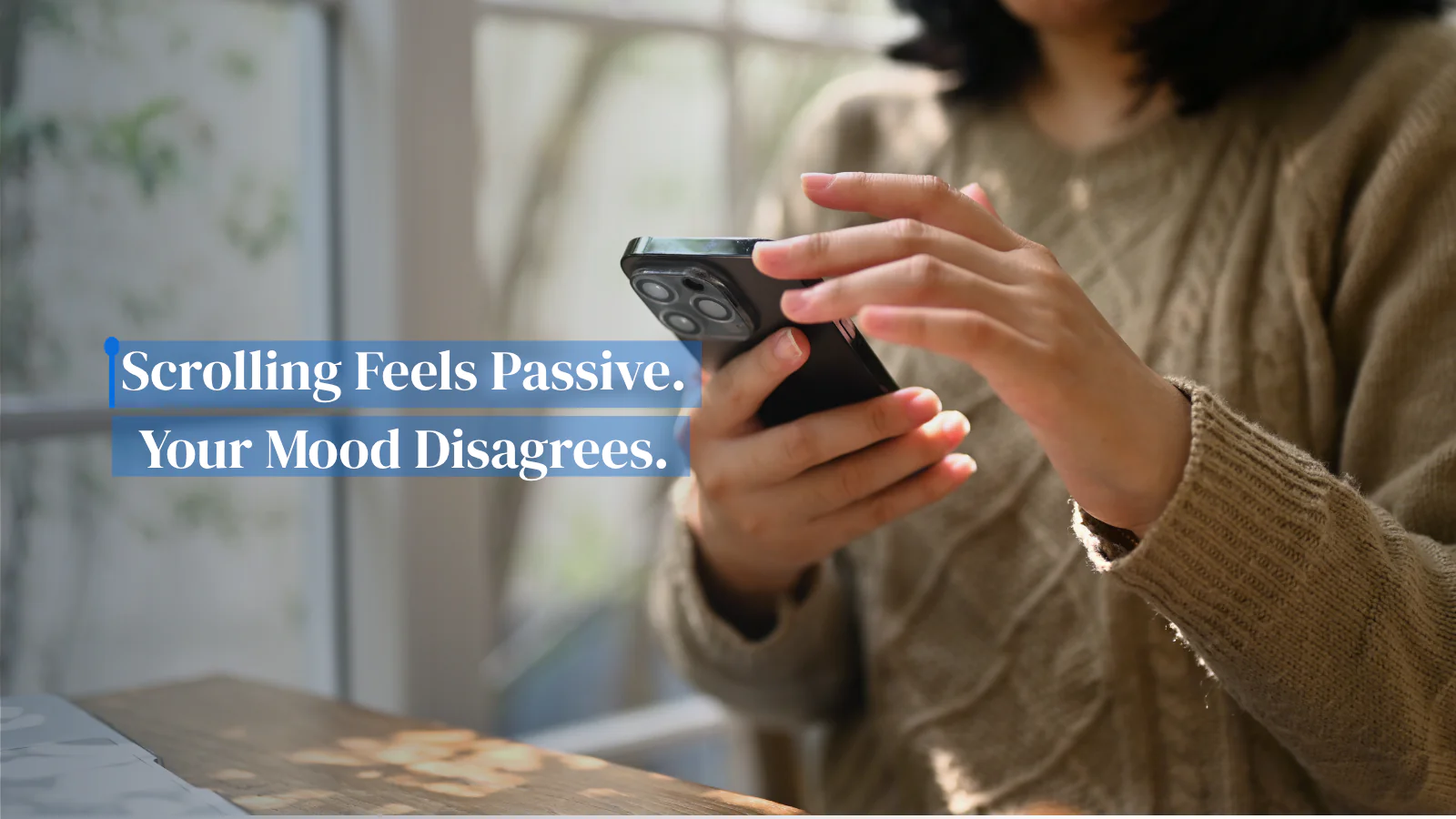
The honest answer is: it depends. Social media can strengthen relationships, build community, and give people who feel isolated a place to belong. It can also fuel comparison, disrupt sleep, and leave you feeling worse than before you picked up your phone. The same platform can do both in the same day. What matters is less whether you use social media and more how it tends to leave you feeling.
The comparison trap
Feeds are highlight reels: curated, filtered, and edited to show people at their best. Your brain, though, compares those peaks to your own ordinary, behind-the-scenes reality. Do that for an hour and it’s easy to come away feeling like you’re falling behind at work, at parenting, at life. This constant upward comparison is one of the most consistent links researchers find between heavy social media use and lower mood and self-esteem.
Social media, sleep, and the brain
Late-night scrolling is a double hit. The content itself is stimulating and often emotionally activating, and the light and endless novelty make it harder to wind down. Poor sleep, in turn, is one of the biggest drivers of anxiety and low mood, so a nightly scroll can quietly set up a hard next day. The apps are also engineered to hold your attention, which is why “just five minutes” so often isn’t.
It hits teens differently
For teenagers, whose identities and social lives are still forming, social media can carry extra weight. The pressure to present a perfect image, the visibility of who was included or left out, and exposure to unrealistic standards can intensify anxiety and depression during an already vulnerable stage. If you’re a parent, staying curious and open, rather than only restrictive, tends to keep the conversation going.
Building a healthier relationship with your feed
You don’t have to quit to feel better. Try noticing which accounts consistently leave you drained and unfollowing or muting them. Keep your phone out of the bedroom so the last and first thing you see isn’t a feed. Set loose time limits and turn off non-essential notifications. And when you catch yourself comparing, remind yourself that you’re measuring your whole life against someone’s highlight reel.
Frequently asked questions
Is social media bad for your mental health? Not universally. Research consistently links heavy, passive use to comparison, disrupted sleep, and lower mood, while active use that involves real interaction with people you know looks more neutral or positive. How you use it matters more than whether you use it.
How much social media is too much? There isn’t a clean number that applies to everyone. A more useful test is how you feel afterward and what the time is displacing. If scrolling is regularly cutting into sleep, exercise, or time with people, that’s the signal, regardless of what the screen-time report says.
Should I make my teen delete social media? An abrupt ban often costs you the conversation, which tends to be the more valuable thing to keep. Shared rules around phones at night, curiosity about what they’re actually seeing, and attention to changes in mood or sleep generally do more than removal alone. If you’re seeing real distress, that’s worth a professional conversation.
When to seek help
It’s worth naming the limit of all of this advice. Muting accounts and charging your phone in the kitchen can change how a day feels, but they can’t treat a condition, and it’s a mistake to keep optimizing your habits when something bigger is going on.
If anxiety, low mood, or sleep problems persist even after you’ve adjusted your habits, social media may be a contributor rather than the root cause. Persistent symptoms are worth taking seriously. BestMind offers evaluations and support for anxiety and depression, in person and by telehealth, across Oregon and Washington. How you feel offline is what matters most.
